
How RPM Monitoring Helps a JCB Engine Run Smoother and Last Longer
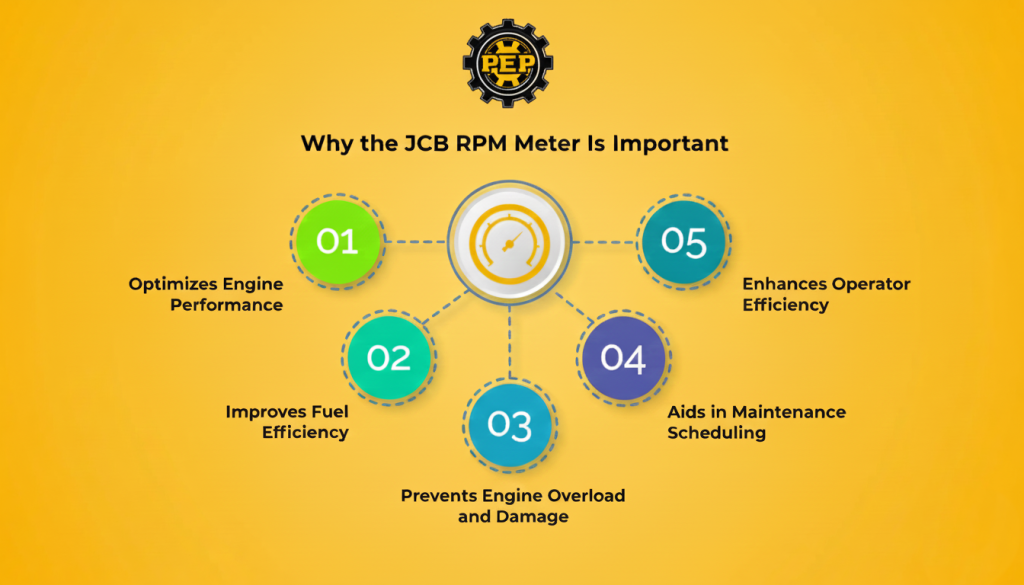
Why RPM Monitoring Matters in JCB Engines
Heavy equipment relies on accuracy, timing, and controlled power delivery. One of the main tools that helps operators maintain this balance is the RPM gauge fitted in JCB machines. Whether you run an excavator, a backhoe, or any other JCB model, understanding this gauge can dramatically improve machine efficiency and reduce engine stress.
This guide explains what the RPM gauge actually does, how it functions, and why it plays a vital role in keeping the machine productive and healthy.
What Exactly Does the RPM Gauge Show?
The RPM (Revolutions Per Minute) gauge displays the rotation speed of the engine’s crankshaft. This information helps the operator judge how much load the engine is taking and how efficiently it is producing power.
In simple terms, the RPM gauge tells you how hard the engine is working at any moment—which is crucial for protecting it from unnecessary strain.
How RPM Reading Is Collected Inside a JCB Machine
A set of sensors connected to the crankshaft or alternator monitors rotational speed. These sensors create electrical pulses that the meter converts into a readable RPM value.
Summary of the Process:
Rotation Detection: The crankshaft spins during engine operation.
Pulse Transmission: A sensor tracks every rotation and sends signals.
Reading Display: The dashboard meter translates those pulses into an RPM number—shown digitally or with a dial.
Newer models come with digital dashboards that display RPM more accurately and support real-time engine analysis.
Why RPM Monitoring Is a Key Part of JCB Operation
1. Helps the Engine Deliver Power Efficiently
Keeping the RPM in the recommended zone ensures the engine produces power smoothly without unnecessary fuel burn or strain.
2. Better Fuel Control
Fuel consumption rises sharply when RPM fluctuates abnormally. The gauge helps operators stay inside the most fuel-efficient range during digging, lifting, or idling.
3. Reduces Overheating and Internal Damage
Excessive RPM causes heat, vibration, and rapid wear. Watching the gauge prevents the engine from running beyond safe limits.
4. Early Warning for Maintenance Teams
Sudden RPM changes often point to blocked intakes, injector issues, failing sensors, or alternator troubles. These clues help technicians fix issues before they become costly failures.
5. Smoother and More Accurate Machine Handling
Correct RPM makes digging, loading, and travelling more controlled. Operators can work faster and more accurately with less effort.
Typical Problems That Affect RPM Readings
Broken or loose sensor wires
Incorrect alternator output
Faulty dashboard screen
Software issues in digital meters
Any irregular reading should be checked immediately to prevent engine performance issues.
How to Keep the RPM Gauge Working Properly
Inspect sensor wiring for damage or corrosion
Clean the sensor area to avoid dust or oil blockage
Choose original JCB components for replacements
Make sure the alternator voltage remains stable
Test RPM accuracy during every service cycle
Final Thoughts
An RPM gauge may look like a simple indicator, but it plays a major role in maintaining the engine’s performance and preventing breakdowns. A properly functioning RPM gauge helps operators save fuel, reduce machine stress, and extend engine life. Choosing a genuine JCB RPM gauge ensures accurate readings and dependable performance on any work site.